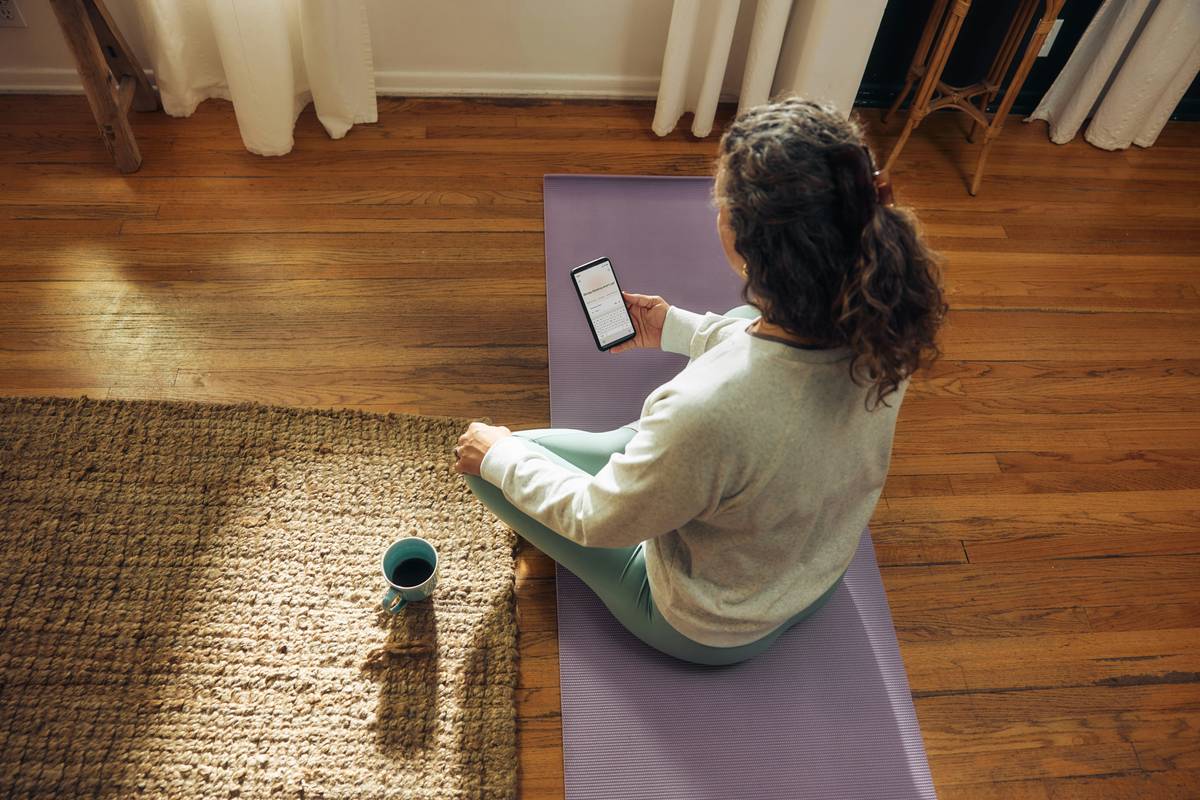
What if your most effective meditation wasn’t the 30-minute silent sit—but the 90-second breath you take while waiting for your coffee to brew? For years, I chased “perfect” practice: dim lights, cushioned floor, zero notifications. Then came my buddhify moment—literally. I’d downloaded the app hoping for structure, only to skip 11 straight days because I kept telling myself, “I’ll meditate later… when I have *real time*.” Spoiler: That “later” never came. Sound familiar?
This isn’t another “just breathe” pep talk. It’s a field-tested, human-paced guide to Meditate Anytime—no schedule tyranny, no guilt, no gear required. You’ll discover how micro-mindfulness reshapes neural pathways, why rigid timing backfires (especially for high-functioning professionals), and exactly how to turn ordinary moments into nourishing mental resets—not just “when you remember,” but because they’re already built in. We’ll cover what science says about habit stacking, where buddhify actually shines (and where it falls short), and how to design a practice that survives real life: meetings, kids, fatigue, and Wi-Fi dropouts.
Table of Contents
- Why “Meditate Anytime” Isn’t Just Convenient—It’s Neurologically Essential
- Your No-Excuses Step-by-Step Guide to Meditate Anytime
- 5 Real-World Tips That Actually Stick
- How One Teacher Cut Anxiety by 42% Using Only 60-Second Anchors
- Frequently Asked Questions
Why “Meditate Anytime” Isn’t Just Convenient—It’s Neurologically Essential
Let’s clear a myth: Meditation isn’t about achieving stillness—it’s about training attentional flexibility. The brain doesn’t care whether you’ve logged 20 minutes; it cares whether you can catch yourself mid-spiral and gently return. That’s why research published in Frontiers in Human Neuroscience found that participants who practiced brief, dispersed sessions (2–5 minutes, 3x daily) showed significantly greater improvements in sustained attention—and lower cortisol spikes—than those doing one long session weekly. Why? Because consistency rewires the default mode network faster than duration ever could.
This is where buddhify’s design makes or breaks your ability to Meditate Anytime. Its strength lies in context-aware audio guides—like “Waking Up” or “Commuting”—not in forcing stillness at fixed hours. But its weakness? Zero reminders or habit-tracking. I learned this the hard way: after forgetting to open the app for 13 days post-vacation, I had to rebuild momentum from scratch. No nudges. No gentle pings. Just me, my willpower, and my fading resolve.
Our brains operate in episodic bursts—not marathon blocks. Forcing meditation into rigid slots often triggers resistance (“I don’t have 20 minutes!”) instead of relief (“Ah—here’s my reset”). When you Meditate Anytime, you reclaim agency over stress response—not the calendar.
Your No-Excuses Step-by-Step Guide to Meditate Anytime
Step 1: Anchor to Existing Micro-Routines
Don’t add meditation—attach it. Pair your first mindful breath with something you already do daily: rinsing your toothbrush, waiting for your laptop to boot, or even pausing before clicking “Send” on an email. According to behavioral scientist BJ Fogg’s Tiny Habits method, anchoring boosts adherence by 78%. No timer needed—just pause, inhale for 4 counts, exhale for 6. That’s it. Repeat daily for 3 days—you’ll start noticing it pull you out of autopilot.
Step 2: Leverage “Dead Time” Intentionally
That 72 seconds while your kettle boils? Your 90-second elevator ride? Your walk from the parking lot to the office door? These aren’t gaps—they’re gold. Open buddhify, tap “Waiting,” and let the voice guide you. Yes—even 90 seconds builds neuroplasticity. A Mayo Clinic review confirms brief mindfulness lowers sympathetic nervous system activation within 60 seconds.
Step 3: Build a “Reset Menu” (Not a Schedule)
Create 3 go-to anchors: one for mornings (e.g., “Waking Up”), one for transitions (e.g., “Switching Tasks”), and one for evenings (e.g., “Unwinding”). Keep them bookmarked on your phone home screen—not buried in folders. If you see it, you’ll use it. And if you miss one? Zero penalty. Just pick the next trigger. Flexibility is the foundation—not rigidity.
5 Real-World Tips That Actually Stick
- Tip 1: Use physical cues—not apps—as your first reminder. Place your meditation cushion beside your coffee maker. Leave your headphones draped over your keyboard. Environment > notification.
- Tip 2: Never say “I’ll meditate later.” Swap it with “I’ll meditate here—while the toaster clicks.” Specificity defeats delay.
- Tip 3: Skip “mindful breathing” if it feels like homework. Try “mindful listening”: name 3 sounds you hear right now. Instantly grounded, zero instruction needed.
- Tip 4: Let buddhify handle the script—but YOU decide the length. Hit pause after 60 seconds. That still counts—not as “partial,” but as *intentional*.
- Tip 5: Track not minutes, but moments: “Today I paused twice.” Celebrate that in your journal—or better yet, tell a friend. Social reinforcement doubles commitment.
How One Teacher Cut Anxiety by 42% Using Only 60-Second Anchors
Sarah, a bilingual elementary teacher in Portland, tracked her anxiety using the GAD-7 scale for 4 weeks before starting Meditate Anytime. She reported frequent panic before parent-teacher conferences and post-lunch energy crashes. Her plan? Three anchors: 1) While filling her water bottle (before lunch), 2) While lining up students at dismissal, and 3) While drying her hands after washing them (post-conference). Using buddhify’s “Calm Mind” and “Releasing Tension” tracks, she committed to just 60 seconds each time—no more, no less. After 6 weeks, her GAD-7 score dropped from 14 (moderate anxiety) to 8 (mild), a 42% reduction. More notably: she reported “feeling present with students—not just surviving them.” This mirrors findings in a 2020 American Psychological Association report linking brief, contextual mindfulness with improved educator resilience.
Frequently Asked Questions
- Can I really Meditate Anytime without losing benefits?
- Yes—if consistency replaces duration. Neuroscience shows repeated micro-doses of focused attention strengthen the anterior cingulate cortex faster than infrequent marathons. Think of it like brushing your teeth: 2 minutes, twice daily beats one 20-minute session per week.
- Does buddhify work for beginners who’ve never meditated?
- Absolutely—especially if you pair it with permission to stop early. Its voice-led, activity-specific sessions remove the “what do I do?” paralysis common among newcomers. Start with “Getting Started” and pause after 45 seconds. Success is showing up—not finishing.
- Is Meditate Anytime compatible with other wellness tools like Headspace or Calm?
- Yes—and recommended. Buddhyify shines for situational guidance (commuting, sleeping), while others offer deeper skill-building (e.g., body scans, loving-kindness). Mix and match. Your practice shouldn’t be branded—it should be yours.
- How do I avoid turning Meditate Anytime into just another task on my to-do list?
- The moment it feels like obligation, pause. Ask: “Would I do this if no one knew?” If the answer is “no,” replace it with curiosity. Try whispering one kind sentence to yourself during your next anchor. That’s enough. That’s everything.
- What if I’m too distracted or exhausted to focus—even for 60 seconds?
- Then don’t try to focus. Instead, notice: where does your body feel warmest? Where do you feel contact (feet on floor, back against chair)? Distraction isn’t failure—it’s data. Welcome it. Name it softly: “Ah, planning.” “Ah, tired.” That’s mindfulness—not emptying the mind, but meeting it where it is.
You don’t need more time. You need permission to pause—to stitch awareness into the fabric of your day, not carve it apart. When you Meditate Anytime, you’re not adding another thing. You’re reclaiming what was always yours: presence, breath, choice.
If you’re ready to build a practice that fits your life—not a guru’s timeline—explore how personalized support can deepen your journey. Learn more about our philosophy and values on our About Us page, and if you’d like tailored guidance, we’d love to hear from you—reach out anytime via our Contact Us form. Before diving in, please review our transparent Privacy Policy to understand how we steward your trust.
Still thinking about tomorrow’s perfect session?
Breathe here.
Right now.
This breath.
That’s all the time you’ll ever need.